From the perspective of the martyred leader, science and technology were tools for producing independence.
According to the Qom University of Technology Public Relations report and quoted by ISNA news agency, the president of Qom University of Technology said: In the intellectual system of the martyred Imam, the role of science, technology and universities in the progress of society is defined as a means of producing independence, and the martyred leader of the Islamic Revolution always emphasized this issue. He emphasized scientific authority through innovation, transforming knowledge into wealth and technology, and considered it one of the most important requirements for the progress and independence of the country.
Jafar Ghanbari stated in an interview with ISNA: Our martyred leader has given numerous speeches in this field of science and technology and the university institution, and he always emphasized on topics such as national dignity, the progress of the country, the all-round progress of the country, especially science-based progress, self-confidence and confronting self-defeat, as well as resistance to foreign domination, which is considered a summary of the intellectual system of the martyred leader of the Revolution, especially in relation to student and academic audiences.
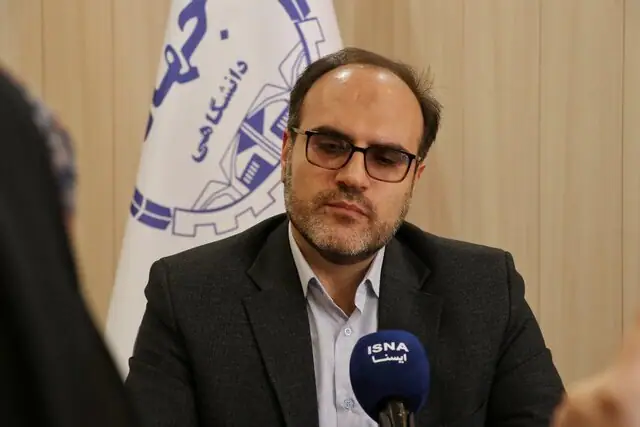
The president of Qom University of Technology continued by stating that the martyred leader always emphasized the status of science, knowledge, and the university, and considered science and knowledge as a tool for independence and resistance against foreign domination. He stated: The best activity of the university to explain and institutionalize this intellectual system among students is to create practical and operational examples of this intellectual system. We must go beyond the conventional and common format of propaganda, conferences, meetings, and workshops. Academics must introduce successful cases at the community level that are consistent with the intellectual system of the martyred leader of the revolution, especially from a scientific perspective, and demonstrate concrete examples of this path.
Ghanbari added: "Especially from the student and academic perspective, if the innovation and wealth creation ecosystem from knowledge is seriously supported in universities, the student can see that with the idea he has and with the support and assistance he receives from society and the university, he is able to transform his knowledge, firstly, into personal financial independence, and secondly, by participating in major national projects, he can also contribute to the independence of the country. This is one of the most important actions that universities can take.
The role of science, technology, and universities in the progress of society
He stated: "One of the most important characteristics that the martyred leader considered for the university was that the university should not be a mere consumer of knowledge produced abroad, but in addition to moving within the boundaries of knowledge, it should also play a special role in producing the technologies needed by the country."
Pointing out that one of the important emphases of the martyred leader in recent years was the discussion of the software movement and support for the elites in this field, which seems to need to be revived and emphasized, Qanbari said: Also, citing the hadiths in this regard, especially a hadith from the Commander of the Faithful (AS) who says: "Knowledge is the Sultan," universities should be a means for society and the country to achieve science in order to bring independence and self-reliance in the fields of technology to the country.
The president of Qom University of Technology continued by emphasizing the necessary measures of universities and added: Almost all of these activities return to the university in some way; although macro-policymaking may be outside the university's jurisdiction, universities themselves can play an effective role in implementing these policies.
He continued: This role can be realized by maintaining scientific growth, moving within the boundaries of knowledge, and preventing scientific stagnation in any situation, especially under sanctions. Even the academic sanctions that some universities are facing can be seen as an opportunity, because when space is limited, internal capacities, forces, and capabilities are activated and compensate for the existing gaps.
Ghanbari stated: Another measure that should be considered in all universities and that macro policies should be directed in this direction is the issue of reducing the excessive emphasis on article production; an issue that the Supreme Leader of the Revolution and the Martyr Leader have also emphasized many times.
The president of Qom University of Technology noted: Unfortunately, in recent years, a significant part of the power and energy of professors and postgraduate students has been spent on article production, while it would be better to direct these capacities towards solving the real problems of the country in order to compensate for some of the existing gaps.
In response to the question of how values such as self-confidence, seeking justice, academic independence, and serving the people can be institutionalized in the educational, research, and cultural space of the university, he said: To strengthen self-confidence, appropriate measures and policies have been taken to some extent. Among these measures, we can mention the Pathways to Progress camps, which are actually a kind of scientific visit to the latest technological achievements of the country.
The president of Qom University of Technology added: These programs are very helpful, because students get to know major national projects closely, observe them, and receive comprehensive explanations about them. This plays a very effective role in strengthening the sense of self-confidence and reducing self-loathing.
He added: Of course, this capacity is not available everywhere, it does not last forever, and physical access to it is not always possible for all students. Therefore, the same model can be implemented on a smaller scale in the universities themselves. For example, if projects have been carried out by professors or students to solve national or even global scientific problems, they can be displayed to students in the form of permanent exhibitions of scientific and technological achievements. Seeing these successes firsthand will have a significant impact on boosting self-confidence.
The need for students to become more familiar with the thoughts of the martyred Imam
Ghanbari said: The views of the martyred revolutionary leader have been coherently explained by him in many cases. Especially the statement of the second step of the Islamic Revolution, in which the horizon of the second forty years of the revolution is outlined and special emphasis is placed on the role of youth and students. In this statement, in addition to emphasizing faith, special attention is also paid to the role of the young generation. It seems that these concepts should be re-read and examined in the form of dialogue cores, intellectual meetings and debates between academics and students so that the intellectual horizon of the martyred revolutionary leader does not remain merely in the form of a text, but is discussed in the university environment and the groundwork is prepared for moving in that direction.
Emphasizing the need to support issue-oriented student organizations, he stated: Currently, many organizations have public, political or organizational activities, and some also operate in the form of scientific associations, but in many cases they do not pursue a specific and definite goal and their activities are subject to the conditions of the day. If organizations are formed that work purposefully to solve a specific need of society or to draw a desired horizon for the country and are supported, we can hope that these activities will go beyond the level of slogans and enter the realm of action and implementation.
The president of Qom University of Technology said: The best way to pay homage to the martyred leader of the Islamic Revolution is to keep his ideals alive. Just as he himself repeatedly emphasized in his speeches, especially during the days of the passing of the late Imam (may Allah have mercy on him), knowing the Imam, keeping his ideals alive, and preventing the distortion of the late Imam's thoughts are of great importance. He always emphasized the reinterpretation of the late Imam's thoughts and reminded the society of the correct path to lead.
Qanbari concluded by stating that the martyred leader of the revolution, during the many years of struggle before the revolution and after the victory of the Islamic Revolution, when he was responsible for the heavy responsibilities of leading the Islamic system, always followed this concern and spoke about it continuously, adding: He explained the points and requirements needed by the society in accordance with the requirements of each period. Therefore, it is essential that these views and emphases always be part of the ongoing discourse of the country's major policymakers so that the society does not deviate from the path outlined and that what he established or promoted, namely the Islamic Republic of Iran, moves on the same path as determined.