Science: an Effective Language of Diplomacy for Peace and Development
According to the Public Relations Office of Qom University of Technology and as reported by ISNA News Agency, the President of Qom University of Technology stated that scientific language is a successful form of diplomacy in the field of peace development.
He added that science can serve as a tool of power against coercive actors; in other words, if the outcomes and outputs of science and research lead to instruments that create a balance of power, peace will naturally be established.
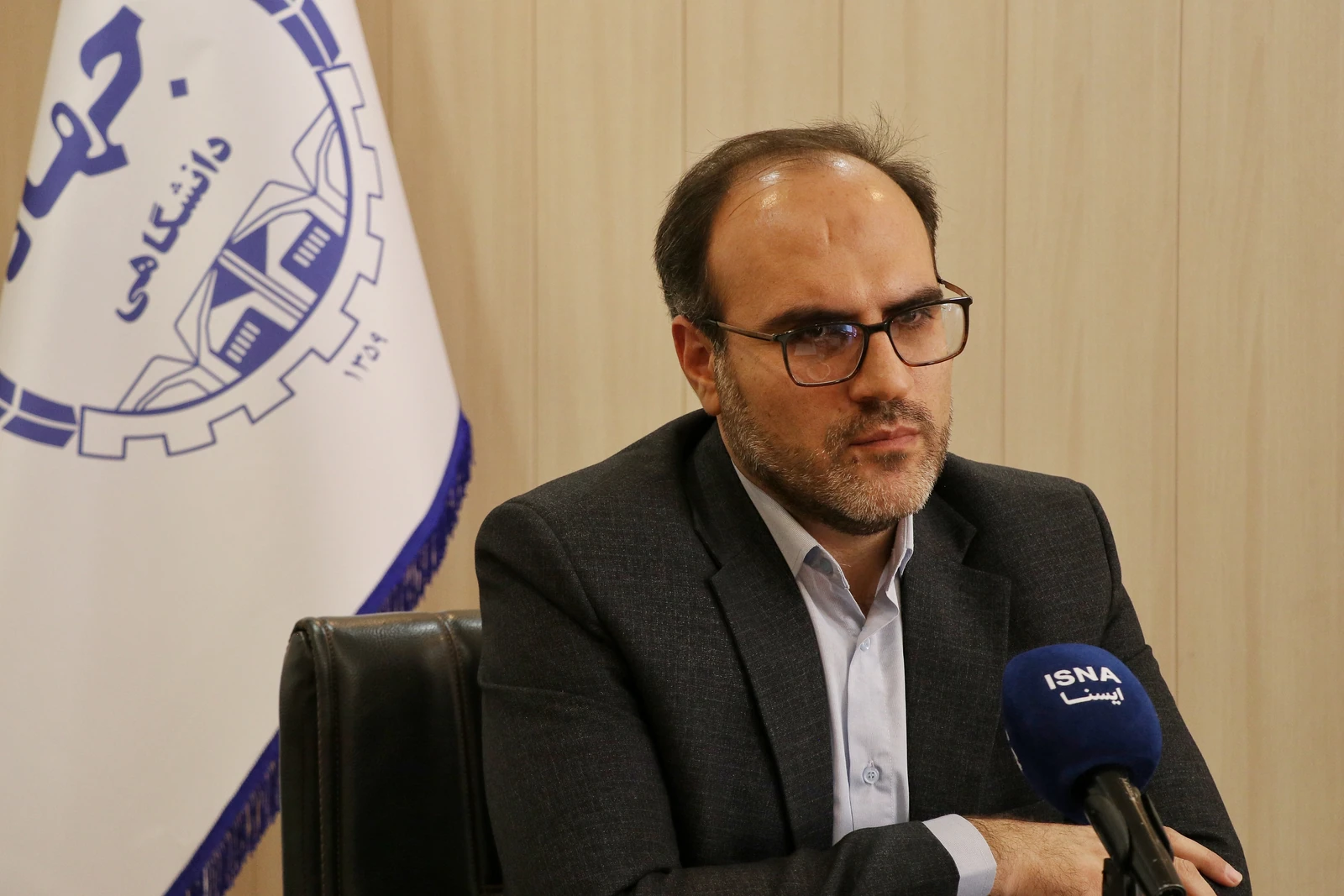
Jaafar Qanbari, on the occasion of World Science Day for Peace and Development, stated in an interview with ISNA: In the field of development, particularly sustainable development, the United Nations has defined a set of goals under the title of the Sustainable Development Goals (SDGs). These goals are designed for member states and affiliated organizations to address fundamental human needs, including poverty, unemployment, and equitable access to science and education.
The President of Qom University of Technology continued: Addressing and fulfilling the need for “quality and equitable education” has always been a priority throughout different periods. In particular, universities, academics, and the academic environment play a significant role in making knowledge accessible and utilizing its outcomes in service of society, which can contribute to the development of peace.
He added that science is inherently a common language of humanity, stating: If we aim for peace in human society, one of the most effective languages for dialogue and discourse is the language of science and research. In academic communities, regardless of race and other distinguishing factors among humans, scientific language has always been a shared language and one of the most successful forms of non-discriminatory and peace-oriented discourse across societies.
Scientific language is a successful diplomacy tool for promoting peace
Qanbari emphasized that scientific language can undoubtedly be considered one of the foundations of achieving global peace. Although this goal requires higher-level prerequisites and specific conditions, even today, scientific language serves as a successful form of diplomacy in the field of peace development.
The President of Qom University of Technology, stressing the concept of achieving peace through power, stated that in today’s world there are always various conflicts and disputes—both internal and international, such as the wars we are witnessing. Peace and peacefulness are noble ideals, but powerful actors may not favor such discourse and may instead pursue their own interests.
He further explained the concept of achieving peace through power, stating that science can serve as a tool of power against aggressors. If the outputs of science and research lead to instruments that balance power, peace will naturally emerge. As Imam Ali (peace be upon him) said: “Knowledge is power; whoever attains it prevails, and whoever lacks it is dominated.”
Qanbari noted that the best interpretation of promoting peace is that if a society or group seeks to establish peace, one of the most important tools for this is scientific language and research achievements. He cited real-world examples from the recent twelve-day war, the eight-year Sacred Defense (Iran–Iraq War), and other imposed conflicts, stating that scientific and engineering achievements have enabled the country to resist aggression, ultimately compelling aggressors to request ceasefire or peace.
He added that research conducted in universities must aim to improve societal and national needs, such that some scientific achievements enhance national power—thereby ensuring peace—while others address challenges such as the environment, food security, water resources, and air pollution. He stressed that universities are the primary institutions responsible for meeting these needs.
The evolution of universities
Qanbari explained the transformation of universities, stating that initially universities were education-oriented institutions (first-generation universities). Later, it became clear that education alone was not sufficient, leading universities to become research-oriented (second-generation universities).
With further industrial and technological developments, it was realized that research alone was also insufficient unless it led to wealth creation. Otherwise, research would remain in libraries as theses and dissertations with limited practical use. This led to the emergence of third-generation universities—entrepreneurial universities focused on job creation and income generation opportunities for students.
He expressed hope that students would take advantage of this valuable opportunity during their youth and channel their energy toward productive paths that benefit society and the country.
Qom University of Technology, he noted, is a young and dynamic university both in terms of its establishment and its academic and administrative staff, many of whom are recent graduates of top universities. This has contributed significantly to its growth and development.
University–industry cooperation
He referred to the “Industry Companion” program, in which students are placed within industrial units. This initiative was a rethinking of traditional internships, which may not always provide sufficient practical outcomes.
Through this program, student teams with diverse expertise are deployed in industries upon the request of industrial managers. They identify problems through visits and discussions and propose solutions. In some cases, students have been directly recruited by those industries.
He also mentioned the establishment of a space called “Seda Café” in an industrial zone, created in cooperation with local managers. The name is derived from the words Industry, Knowledge, and Credibility, and it provides an informal environment for dialogue and problem-solving.
Additionally, a new initiative titled the “Community and Industry Clinic” has been proposed, where individuals from industry, academia, and innovation groups can receive consultation and support regardless of location.
Toward a society-oriented university
Qanbari emphasized that university outputs should enable individuals to create businesses or contribute effectively to existing ones. Given the rapid pace of technological change, universities are moving toward becoming “society-oriented institutions” aligned with societal needs.
He noted that national policies and academic regulations are also moving toward applied research. For example, university promotion regulations now give greater weight to industry-oriented research, and the Ministry of Science has established the “Needs and Ideas System (NAN)” to connect societal needs with academic expertise.
He stressed that universities must actively participate in this transformation.
Combating despair and strengthening hope
He stated that the first step in this transformation is fostering self-confidence and eliminating despair, as hope is the driving force behind human motivation. In recent years, adversaries have attempted to spread pessimism among youth through media and online platforms.
He emphasized that universities must counter this narrative with real and undeniable examples of success achieved by young people in the country.
He also highlighted the role of innovation centers, accelerators, and growth centers in universities, encouraging students to engage actively and manage their time effectively.
Science and global challenges
Responding to a question about global challenges such as climate change, inequality, and war, he stated that science plays a key role in providing precise tools for policymakers to develop fair solutions.
He referenced the COVID-19 pandemic, noting that while science rapidly developed vaccines, challenges remained in fair distribution and policymaking.
He concluded that science alone is not sufficient and must be combined with humanity, ethics, and justice-oriented education to ensure proper decision-making.
Interdisciplinary education and innovation
He emphasized the need for comprehensive interdisciplinary education that integrates ethics and justice alongside scientific advancement.
He highlighted the university’s innovation ecosystem, including innovation centers and growth centers, which support entrepreneurial development.
Finally, he stated that the university evaluates faculty based on research, teaching, and student mentorship, reflecting a more comprehensive approach to academic promotion.