Renewal of Commitment of Qom Industrial University Scholars to Imam Khomeini (ra)
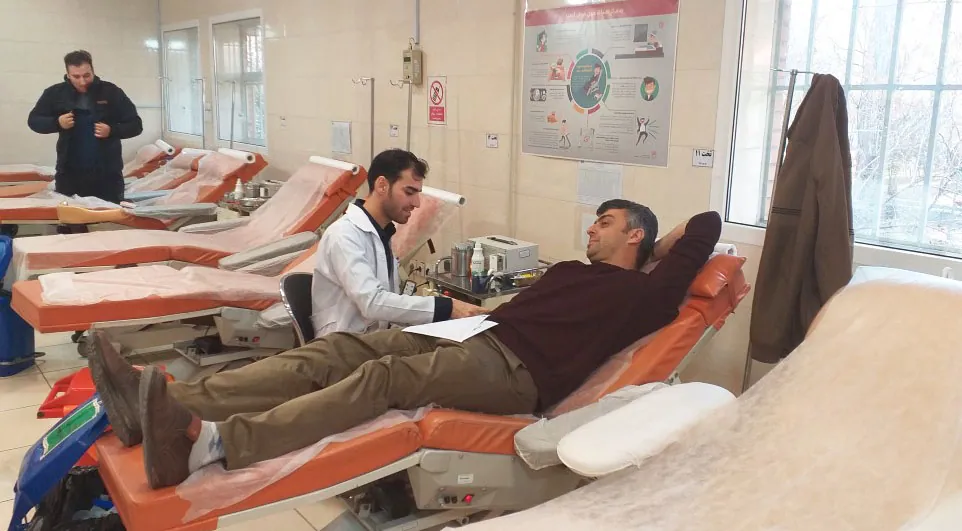
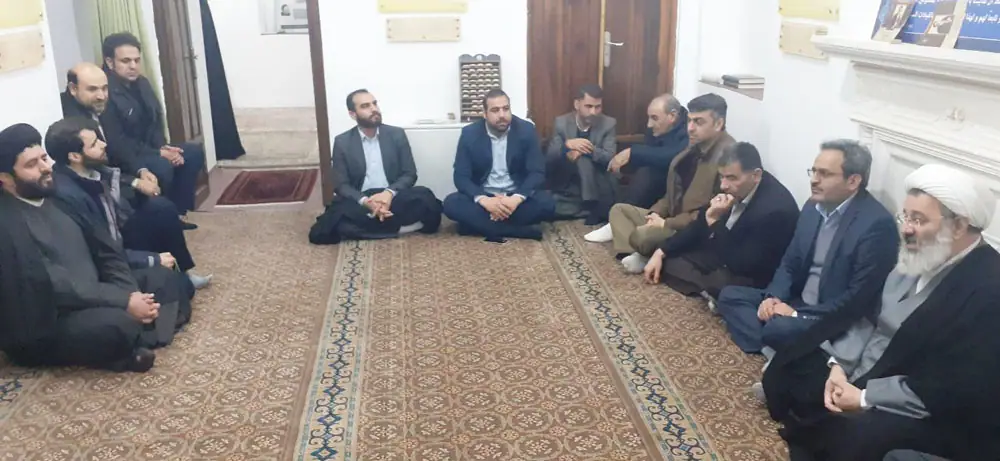
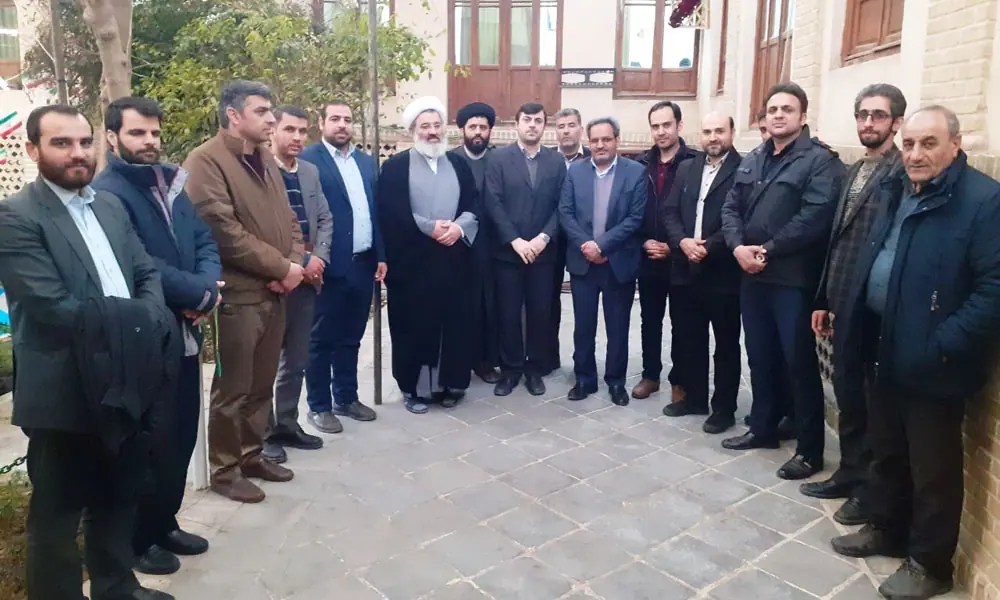
According to the public relations of the university: The scholars of Qom Industrial University participated in a blood donation program organized by the cultural management during the auspicious days of the Fajr decade and then renewed their allegiance to the ideals of Imam Khomeini (RA) and the everlasting martyrs by visiting his residence.
Given the cold weather and the need of our compatriots for blood, the scholars of Qom Industrial University participated in the blood donation ceremony during the auspicious days of the Fajr decade and then renewed their allegiance to the ideals of Imam Khomeini (RA) and the everlasting martyrs by visiting his historical home.
According to the explanations provided by the caretaker of Imam Khomeini's (RA) residence, this building is considered one of the important sites in the city of Qom with a specific political and social history. This house, which was the last residence of the Imam in Qom, is also known by this name due to its location in the Yakhchal Qazi neighborhood.
The house of Imam Khomeini (RA) in Qom is a simple structure consisting of a ground floor and a basement. The courtyard is located in the south of the building, with covered spaces in the east and west.
The interior surfaces of this old house are unadorned and plastered. The exterior surfaces are made of simple brick walls and smooth, unadorned plaster.
This house was purchased by Imam Khomeini (RA) around 1956, and prior to this, no house in Qom was owned by the Imam. He lived there until 1963 and resided in this simple house until his last days in Qom in 1963.
After the Imam’s exile to Turkey, the house was under the ownership of his family, which was later transferred to Ayatollah Pasandideh, the Imam's brother, when the place of exile changed to Najaf and family members moved there. Ultimately, in 1994, it was handed over to the office of the Supreme Leader by the late Haj Ahmad Khomeini.
It is worth mentioning that in the middle of the building, there is a staircase that divides the structure into an outer-eastern part and an inner-western section. In the outer section, there is a large room that has hosted listeners and students of the Imam for many years.
Kobushinsky, one of the Western Iranologists, describes Imam's house as follows: "Imam Khomeini previously lived with his wife and five children in a small house located on a narrow and uneven street, through which a stream of water flowed.
This house was not only the Imam's residence but also the venue for many public meetings, speeches, and important political sessions, including his speech against the passage of the Capitulation Law.
The house of Imam Khomeini (RA) was registered as a national heritage site in Iran on July 2, 1996, under registration number 1745.
It is noteworthy that holding the virtual training course Iran 40+ and the exhibition of revolutionary achievements were among the other programs organized by the cultural management during the auspicious Fajr decade.