First Consultation Meeting of Professors at Qom University of Technology
On the Topic: Teaching Ethics, Culture of Education and Training
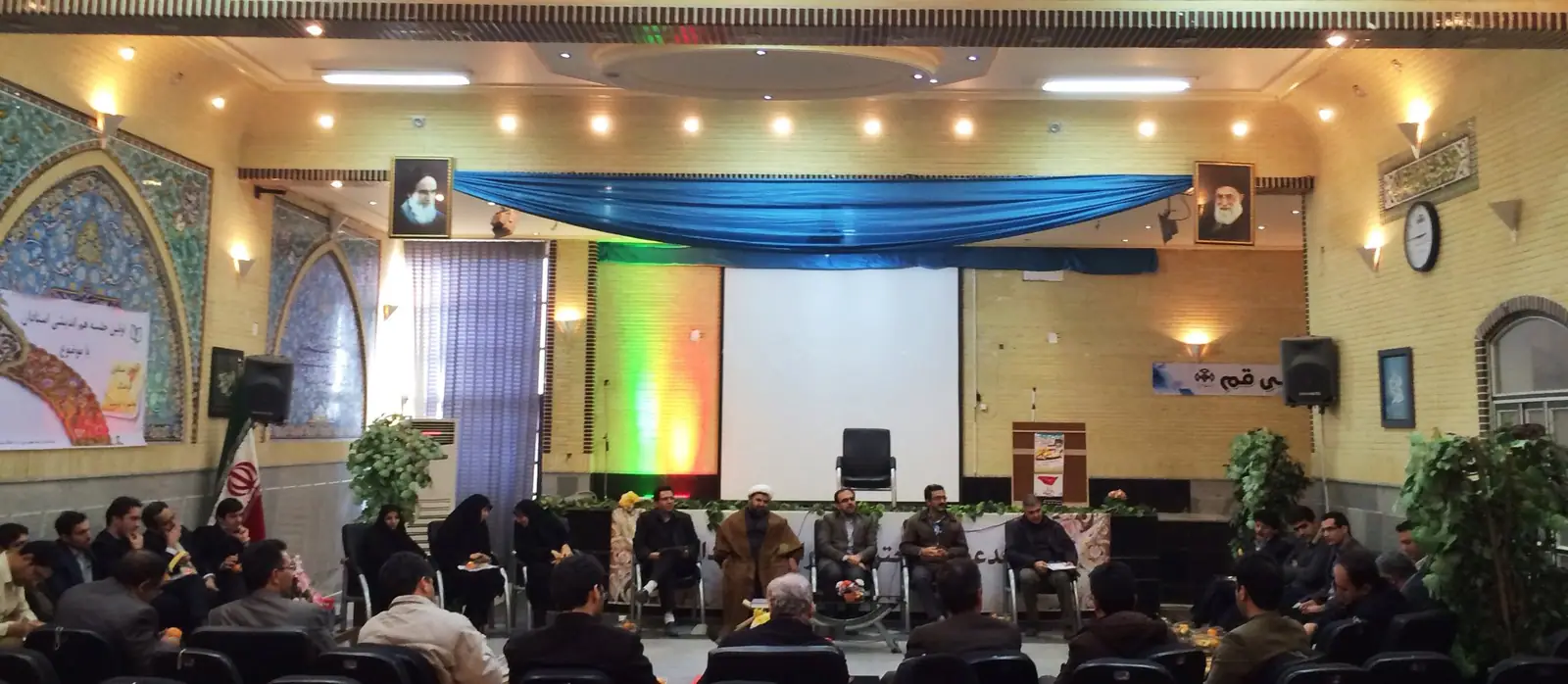
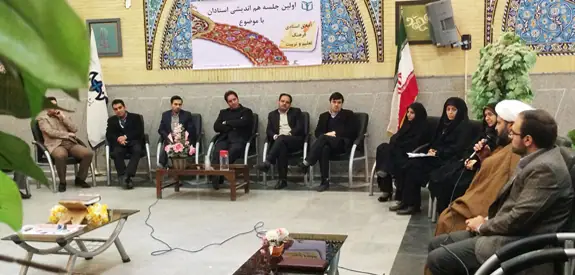
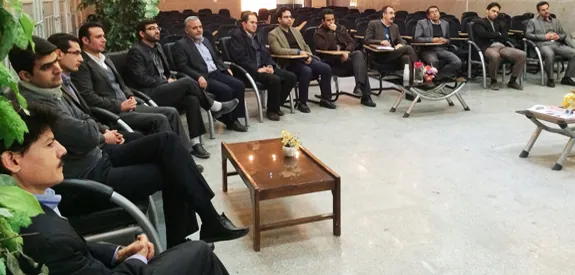
By God's grace, the first brainstorming session of the professors of Qom University of Science and Technology was held on 15/10/93 with the presence of Hojjatoleslam va al-Muslimeen Akhoundzadeh, the provincial representative of the Supreme Leader's office at Qom University of Science and Technology, along with a significant number of esteemed professors from the university.
At the beginning of the session, following the recitation of divine verses by Dr. Al-Imran Nejad, the head of the Basic Sciences Faculty, Dr. Ghanbari, the secretary of the professors' brainstorming session, welcomed the present professors. He provided explanations regarding the brainstorming meetings and knowledge-enhancing courses, emphasizing that the purpose of holding such meetings, besides creating a space for collaborative thinking and exchanging opinions, is to examine the problems and challenges of the university and to find suitable solutions for them.
Furthermore, Hojjatoleslam va al-Muslimeen Akhoundzadeh noted that considering the young and nascent nature of the university and the young average age of its professors, it is commendable for all professors to collaboratively engage with scientific and cultural issues to enhance the educational and cultural quality of the university. He regarded ethics as a key contributor to success in all fields, including education, training, and industry.
As the session continued, Dr. Ghanbari brought up the main topic by addressing some examples of ethics in education and training, particularly in interactions with students, in the mentoring of graduate students, and in dealings with other colleagues. He stated that all professors will be accountable to Almighty God for their behaviors, necessitating a closer examination of how we interact and our manners and conduct.
Then, the attending professors shared their opinions on the topic, with the following key points arising:
Every Muslim, regardless of their situation, has the primary duty to promote good and prevent wrongdoing, and professors can practically fulfill this important duty in their profession. One example of this is respecting students' time and being punctual in class.
In the discussion of teaching ethics, several aspects can be considered: 1 - Ethics in dealing with other professors 2 - Ethics in dealing with students (undergraduate and graduate) 3 - Ethics in scientific-research discussions 4 - Ethics in the way university officials address professors. Among the pitfalls in terms of ethics with other professors is the feeling of jealousy and gossip, especially regarding professors in executive positions.
Continuing the discussion, Hojjatoleslam Akhoundzadeh, in light of the points made by the professors, referred to the sacrifices and heroics of the eight years of holy defense, where warriors fought the enemy empty-handed, achieving victory through hope and reliance, suggesting we now have the duty to cultivate a spirit of hope in our students to prepare them for building a vibrant and successful Iran.
One negative aspect of inappropriate educational ethics among professors is the decreasing motivation among some students and their insufficient attention to academic matters. Professors should possess the skill of attracting students to science and knowledge, taking educational points into account.
Having an experienced professor on the subjects of the sessions was a recommendation that after hearing the esteemed professors' opinions on the discussed topics, we could benefit from the expertise of a specialist in that field.
The importance of being role models for students in all behaviors and actions was another topic raised by the professors, as even a professor's attire could influence students’ behavior. This requires us, as professors, to pay closer attention to all our actions.
The inseparability of ethics and education, and the idea that professors can influence students' modeling even in their interactions with one another, such as being mindful of how they joke with one another, can serve as a lesson for students.
Considering the scientific advancement of the university, professors should take undergraduate programs as seriously as graduate ones and value them. The foundational education at the undergraduate level is more crucial than at higher levels, and professors should not merely desire to teach at advanced levels.
Respect is not merely about speaking well; being duty-bound and valuing students' time constitutes a form of respect. We, as professors, can leave positive memories and impressions for students through correct, suitable, and respectful interactions.
In research discussions, the importance of being healthy and honest was emphasized, and it was stated that if professors put themselves in students' shoes, many problems and stringent measures would be resolved.
Professors, referencing hadiths and narratives, stated that we should interact with others as we would like to be treated ourselves. We must recognize and express the strengths and positive ethics of our colleagues, highlighting them in collaborative and student gatherings, which fosters the advancement and progress of our academic community and serves as a form of behavioral education for students.
At the conclusion of this session, which was conducted in a completely friendly atmosphere, a proposal was made for planning a pilgrimage trip to allow such meetings to address challenges and to expand the friendly and cordial relationships among professors. The session ended with a prayer from Hojjatoleslam va al-Muslimeen Akhoundzadeh, and a token gift from the office of the Supreme Leader's representative at the university was presented to the participating professors.